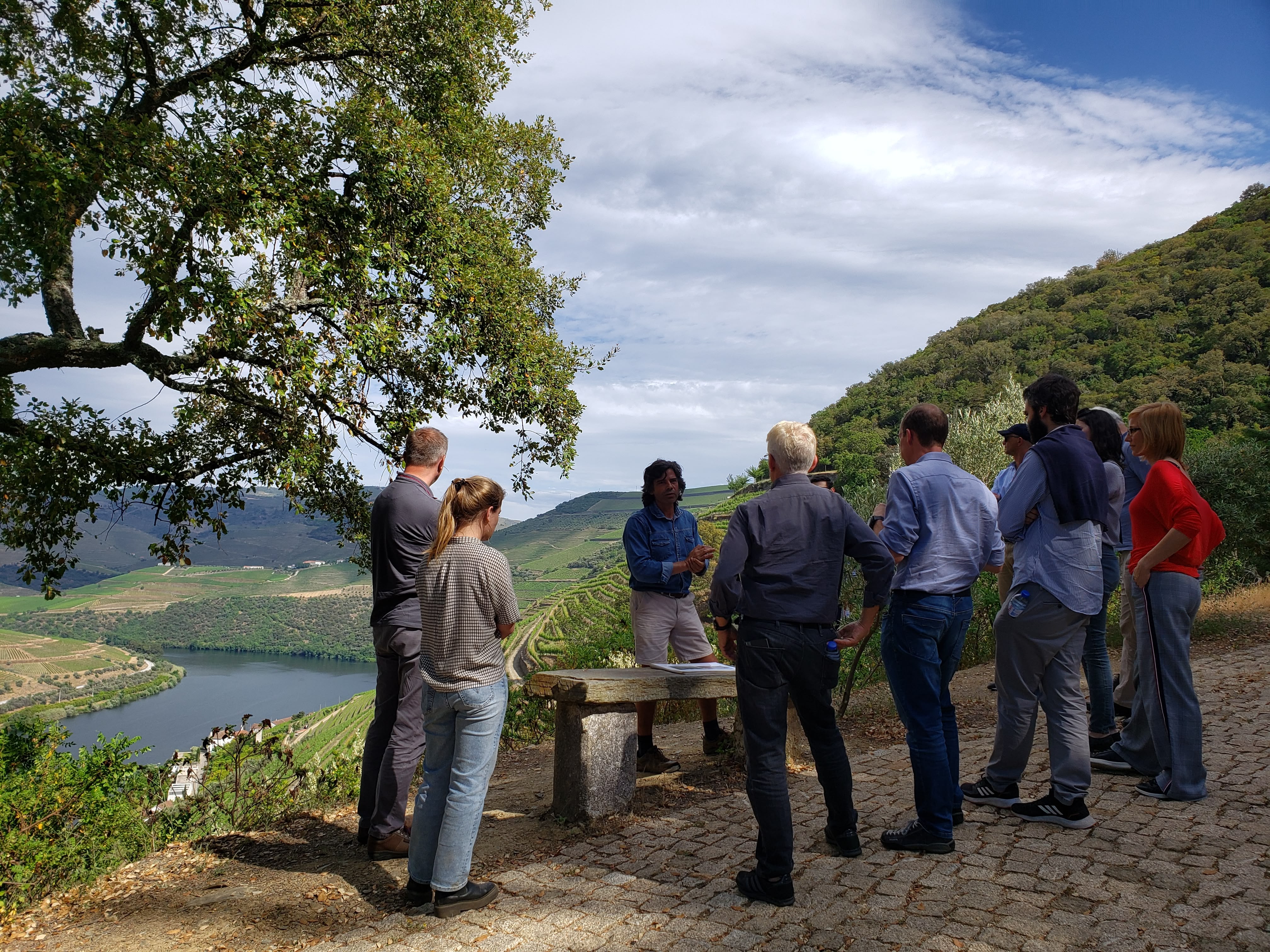
The Douro Socio-Ecological Living Lab (MED-C Living Lab) at UTAD in Portugal is an innovative co-innovation hub focused on sustainable agroecological transitions in the Douro Region.
Located within UTAD's AgroServ Research Infrastructure under the “UTAD-Socioeconomics” RI, the lab integrates research, education, and experimentation to develop socio-economic, organizational, and technological solutions tailored to Mediterranean agroecological challenges.
The Living Lab's core purpose is to foster sustainable development and socio-ecological resilience by facilitating collaboration among winemakers, researchers, local communities, and policymakers. Its approach emphasizes preserving natural resources and cultural heritage while promoting agroecological transition practices through participatory and knowledge-sharing frameworks.
The lab's expertise spans biostatistics, plant physiology, robotics, and data processing, offering decision-support tools and localized data to drive informed stakeholder actions.
Demonstrator Labs
Place-Based Territorial Intelligence Data Lab (Data4LowDensity):
- Focus on data-driven decision support for low-density regions.
- Services include survey design, cognitive mapping, multi-stakeholder panels, and integrated assessment of socio-economic and ecological trade-offs.
Laboratory of Fluvial and Terrestrial Ecology (LEFT):
- Specializes in ecosystem monitoring, conservation biology, environmental impact assessment, and habitat restoration.
Plant Ecophysiology Lab:
- Studies plant responses to environmental stresses like drought and diseases.
- Aims at improving yield, sustainability, and climate resilience for Mediterranean crops.
PRISM Lab:
- Advances remote sensing and IoT-based monitoring technologies for agriculture and forestry.
- Provides geospatial data processing and machine learning services to enhance natural resource and infrastructure management.
This structure fosters a collaborative environment where tailored research services address the socio-economic complexities of Mediterranean agroecological transitions, thus supporting resilient and sustainable regional development in the Douro region
0 Comments
Login or Register to post comments.