Are you wondering how research can support growers facing the challenges of climate change? Are you looking for ways to fund your research, connected to the field of agroecology? Are you considering applying to AgroServ?
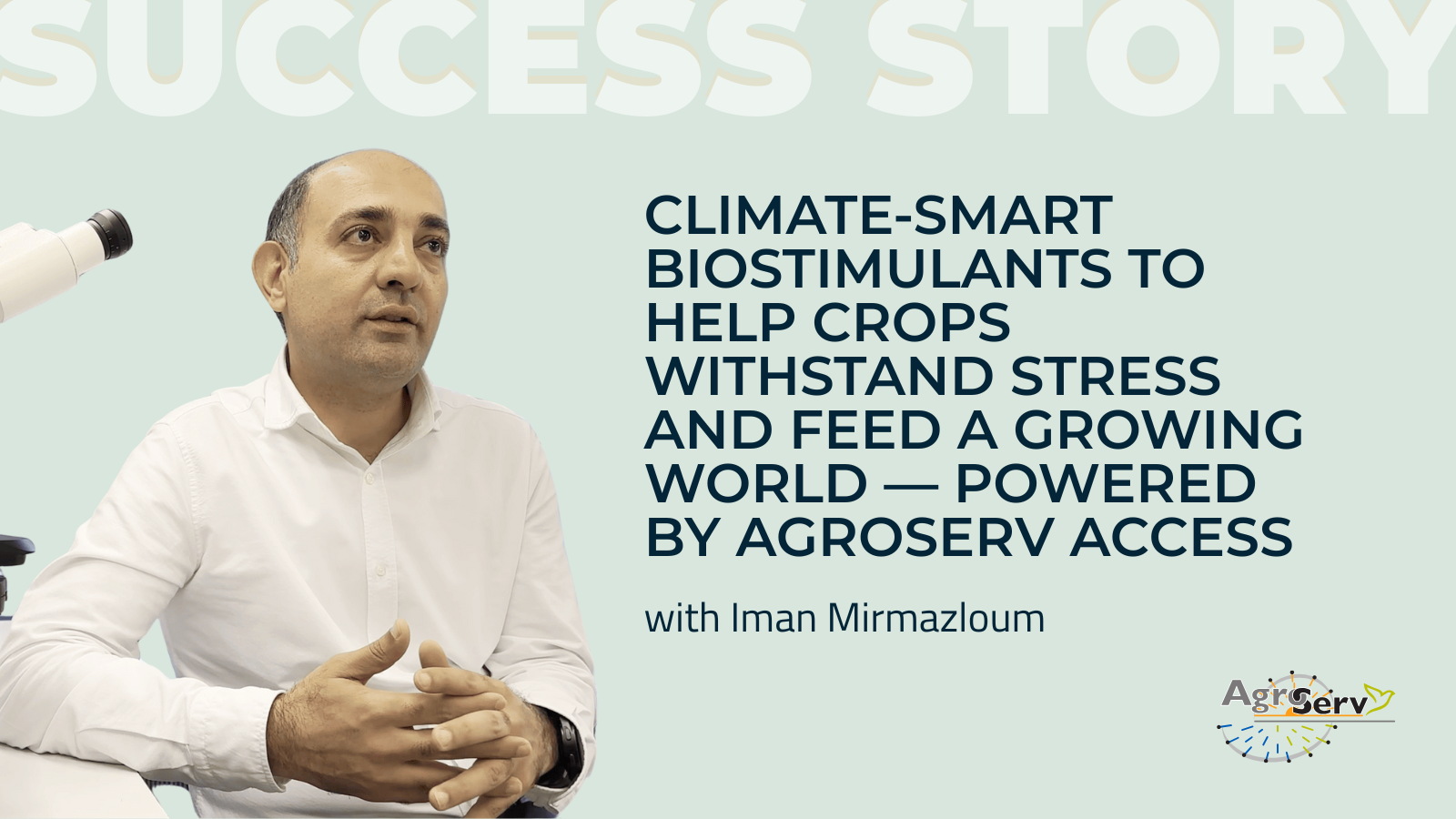
Iman Mirmazloum is a Senior Research Fellow in the Department of Plant Physiology and Plant Ecology at the Hungarian University of Agriculture and Life Sciences. In this short video he explains how natural, affordable biostimulants—from seaweed and algae extracts to compounds that trigger plant signaling like nitric oxide—can boost crops’ innate resilience to drought, heat, and other abiotic stresses in the face of climate change and rising food demand.
His research highlights screening and high-throughput phenotyping to pinpoint active metabolites, the potential of mycorrhizal fungi, and the practical challenge of scaling costly molecules like melatonin—showing why researcher-centered, fast-track access via AgroServ’s integrated research infrastructures matters for turning ideas into field-ready solutions.
Apart from the training at UCLouvain on In vitro culture of arbuscular mycorrhizal fungi provided within MIRRI-ERIC, Mirmazloum accessed the service on Analysis of biomolecules and screening of key bioactivities provided by the HCMR-IMBBC Marine station, a facility part of EMBRC. He also accessed the Multi-sensor, high-throughput plant phenotyping platform at PHENOPlant (CMI Node) and the Multiphoton microscopy (WISH/ALM Node), both within Euro-BioImaging. Finally, the AgroServ access allowed the use of the Plant ecophysiology service (PES), provided by LUKE within AnaEE-ERIC.
Watch the interview on AgroServ's YouTube channel
0 Comments
Login or Register to post comments.