Read how early-career researcher Francesco Sorrentino leveraged AgroServ's Research Infrastructures to explore how plants perceive insect pheromones, transforming his research perspective and overcoming critical technical challenges.
by Francesco Sorrentino
AgroServ user with the project 24-C2-Agro-TNA-008 titled: "Plant Induced Responses to Insect Derived Airborne Signals"
I am Francesco Sorrentino, a PhD researcher pursuing my doctoral degree at the University of Eastern Finland. My work primarily focuses on insect chemical ecology, investigating how atmospheric pollutants, such as ozone and nitrate radicals, can interfere with insect pheromones and disrupt insect communication.
Through AgroServ, I had the opportunity to step outside my main area of expertise and explore a complementary perspective. While my research typically focuses on insect communication, this project allowed me to investigate how plants respond to insect pheromones, opening a new dimension in my work and expanding my scientific approach.
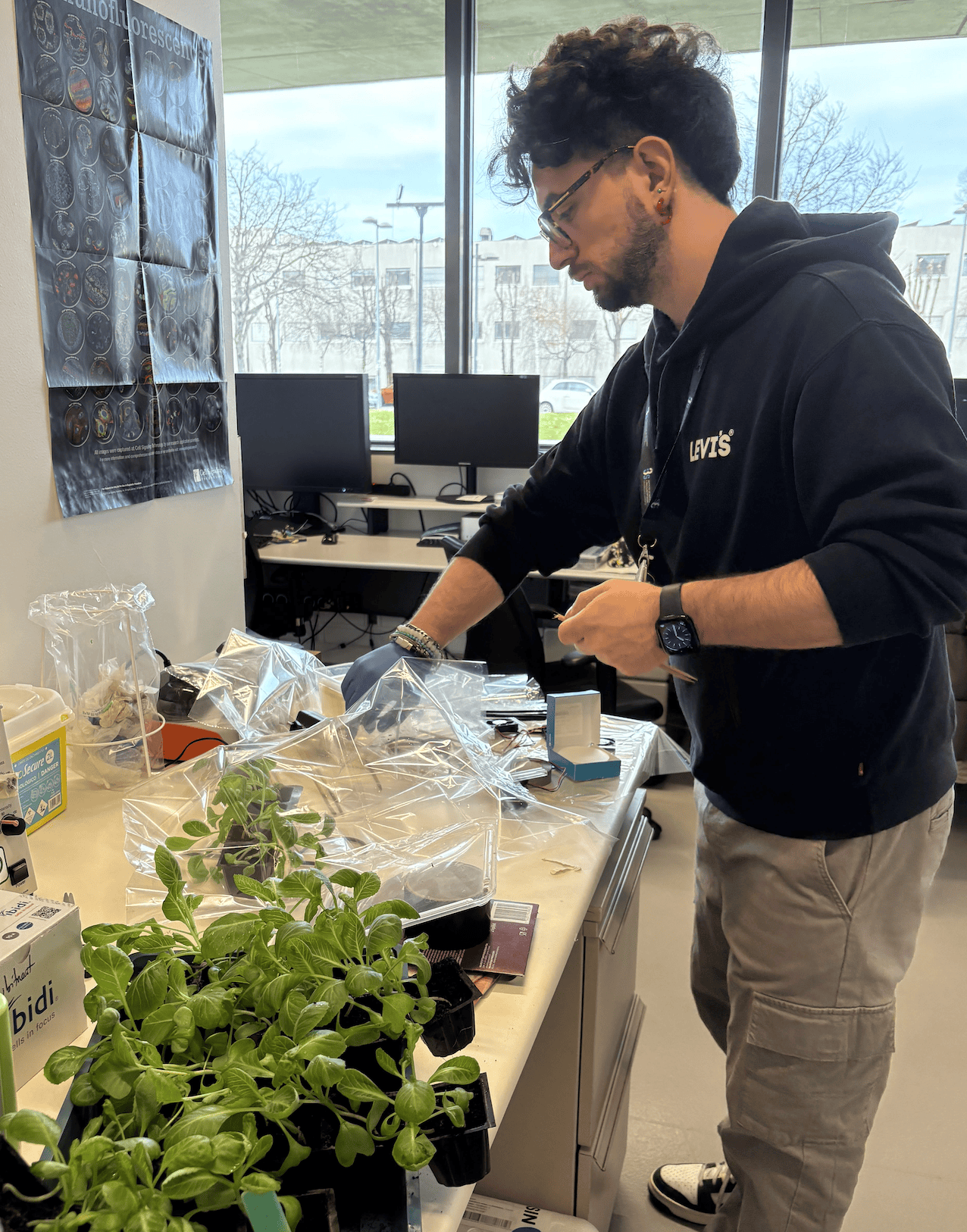
I first became aware of AgroServ through discussions with fellow researchers, shortly after the first call was launched. Together with my team (both my supervisors), we immediately recognized the potential of this initiative and started developing a project proposal. We explored the AgroServ services catalogue to identify facilities that could support our research, particularly those offering advanced imaging and phenotyping. Among these were INFRAVOL (EMPHASIS) and a node of Euro-BioImaging. However, the process was not straightforward. Despite initial interest from one imaging facility, we were later informed that they could not support the project due to its technical complexity and the resources required. We quickly reached out to alternative facilities but, as our project required highly specialized expertise that was not readily available at the time, we had to rethink our plans.
This was a challenging moment for us. We had already invested significant time and effort into the proposal, and the lack of technical support risked compromising the entire application. Nevertheless, we decided to continue and wait for the next AgroServ call. During this period, the scientific idea behind our proposal continued to evolve and was integrated into a larger research framework, leading to the development of the PHESERE project (Insect pheromones and climate change: Effects of ozone and warming on sexual communication and plant-induced resistance). This project, funded by the Research Council of Finland, investigates how climate change factors such as ozone and warming affect pheromone-mediated interactions, including both insect communication and plant responses to insect-derived signals. Within this broader context, our AgroServ project called PIRIDAS (Plant Induced Responses to Insect Derived Airborne Signals) represents a focused component, specifically addressing how plants perceive insect pheromones as early signals.
A few months after the end of the first call, we reconnected with the Euro-BioImaging team, who helped us identify a new potential collaborator. Through this process, we were put in contact with the Portuguese Platform of BioImaging (PPBI, Porto), where we found strong support from the very beginning. Together with PPBI and INFRAVOL, we were able to refine and finalize our proposal. Our project was eventually submitted to the second AgroServ call and was successfully selected, receiving a high evaluation from the review panel. This outcome was not only a recognition of the scientific value of our work, but also of the importance of persistence, adaptability, and collaboration in overcoming research challenges.
Our interest in AgroServ was guided by several factors. First, the opportunity to collaborate with different research infrastructures and teams provided access to expertise and technologies that are not available within a single institution. Scientific research today is increasingly interdisciplinary, and it is often limited not by ideas, but by access to appropriate tools and facilities. It is simply not feasible for individual research groups to possess all the necessary equipment. In this context, initiatives like AgroServ play a crucial role by connecting researchers with advanced infrastructures and enabling high-quality, collaborative science. The financial support provided, even for small expenses, further facilitates these exchanges and makes such collaborations more accessible.
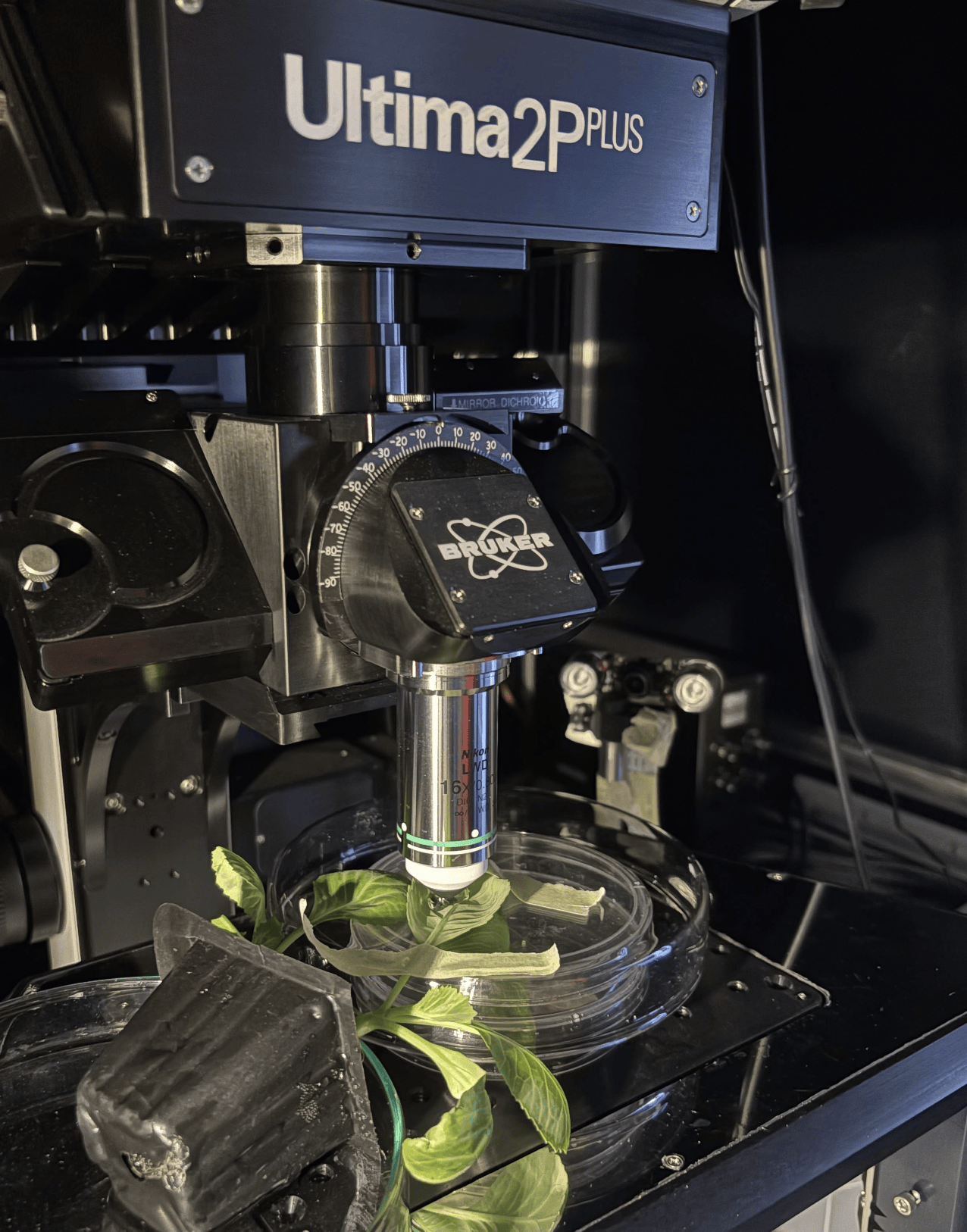
Access to Euro-BioImaging at PPBI in Porto was a particularly valuable experience. It allowed me to directly observe biological processes that I had previously only studied conceptually. Coming from a research background that is now more focused on insect chemical approaches, this experience pushed me to integrate imaging-based methodologies and strengthened the interdisciplinary nature of my work. Through advanced microscopy, we were able to investigate early cellular responses in plants exposed to insect pheromones, providing new insights into how plants may perceive these airborne signals.
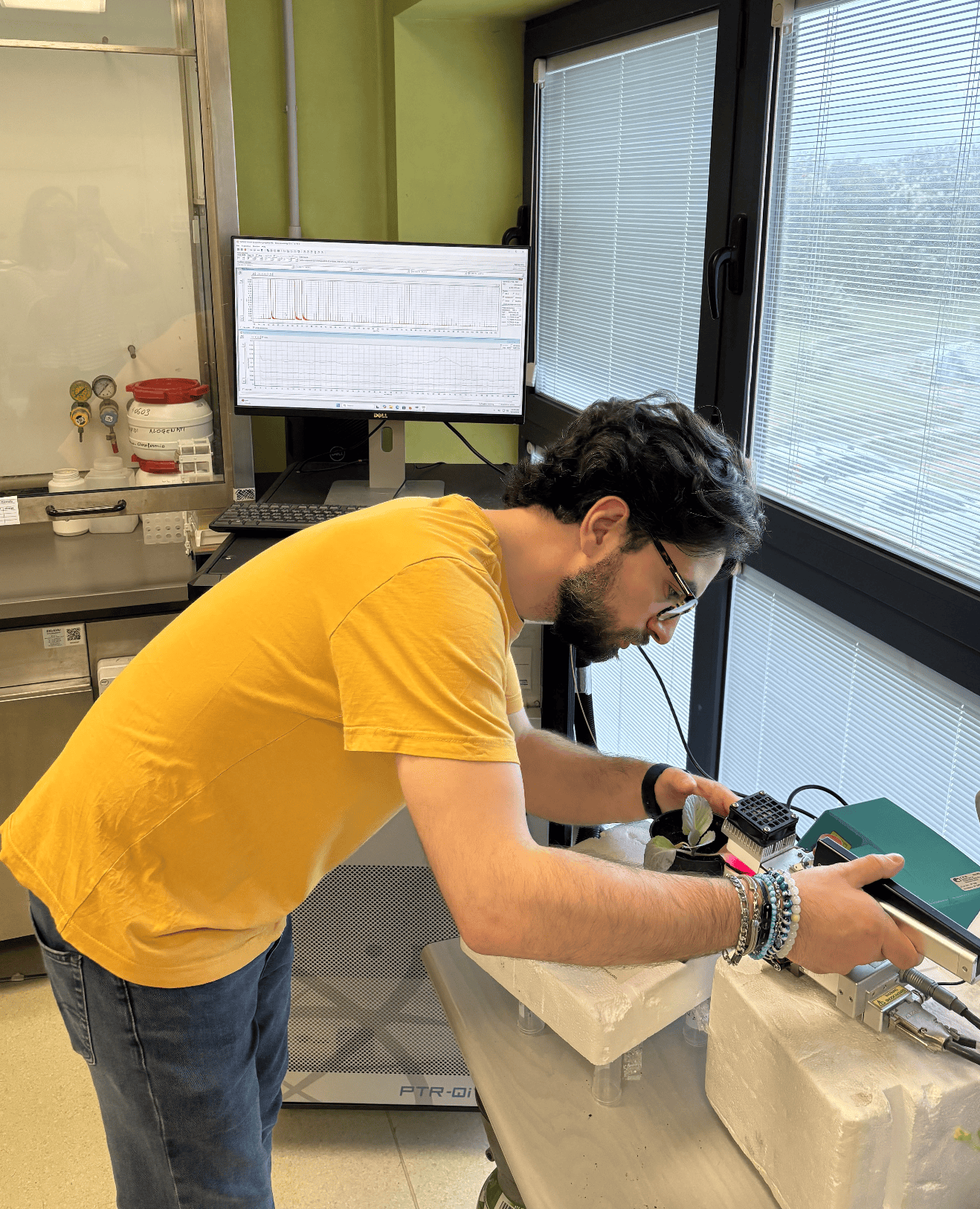
The second part of the project, hosted at INFRAVOL (EMPHASIS) in Naples, builds on these findings by exploring plant responses from a different perspective. Here, we will investigate how plants exposed to insect pheromones alter their volatile emissions and how these changes influence interactions with herbivores. This step represents a natural continuation of the project, bridging cellular-level observations with more ecologically relevant processes.
Overall, this experience has had a strong impact on my development as a researcher. It allowed me to move beyond a single disciplinary perspective and to connect insect and plant biology within a broader ecological framework. AgroServ enabled me not only to access technologies and expertise that were not available in my home institution, but also to build collaborations, develop new skills, expand my scientific vision, and strengthen my professional network. More broadly, this experience highlights the fundamental importance of European research infrastructures and collaborative networks. They enable researchers to go beyond limitations, foster multidisciplinary approaches, and tackle complex scientific questions that cannot be addressed in isolation. In doing so, they play a key role in advancing science for agroecolgy and supporting the development of more sustainable and resilient systems in agriculture and beyond.
______________________
👉 Access the AgroServ Projects dashboard here
The 5th Call for Proposals is now open, with its final deadline on June 8th, 2026. This upcoming call offers another opportunity for innovative projects to join the AgroServ initiative and contribute to the agroecological transition.
For more information about the TA/VA programme visit the dedicated page or contact AgroServ's Communication officer - daniele.baldo[at]anaee.eu.
0 Comments
Login or Register to post comments.